



Tarsal tunnel syndrome (TTS) is an often overlooked cause of pain and numbness in the foot and ankle. It occurs when the tibial nerve, an important nerve in the inner ankle area, is pinched in a narrow tunnel – similar to the more well-known carpal tunnel syndrome in the hand. But what is behind this problem and when does treatment become necessary?
What is tarsal tunnel syndrome?
The tarsal tunnel is a narrow space inside the ankle through which nerves, tendons and blood vessels run. If this area is constricted due to overuse, injury
ing, misalignment or inflammation, the tibial nerve can come under pressure. This often results in pain, burning, tingling or numbness on the sole of the foot and the toes. Many sufferers describe the symptoms as stabbing or electrifying, especially after exertion or long periods of walking.
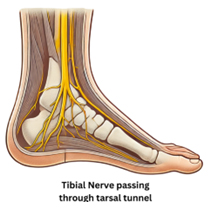
Diagnosis: A nerve has been touched
The diagnosis begins with a detailed examination. Doctors test the sensitivity of the nerve and can carry out special procedures such as the Tinel test, in which tapping on the nerve triggers the typical symptoms. Imaging procedures such as MRI or ultrasound help to visualize causes such as inflammation or anatomical constrictions.
When is an operation necessary?
Not every constriction of the nerve needs to be operated on. Conservative therapies such as shoe inserts, anti-inflammatory medication or physiotherapy often help. However, if the symptoms persist or worsen despite treatment, surgery may be necessary. The aim of the operation is to relieve the nerve and permanently reduce the pressure.
A look inside the operating theater
The operation is usually minimally invasive and performed under local or general anesthesia. The surgeon opens the tarsal tunnel, removes tissue that is constricting the nerve and thus creates space again. In many cases, the procedure is successful and patients report a significant improvement in their symptoms.